Neighborhood line, Chicago neighborhood
Lazy Viking flames in Old Town: following the air path
In a narrow house the kitchen can sit deep inside, far from the street door, and every burner depends on air that has to travel the length of the building. When a Viking flame turns lazy or the hood stops pulling after a renovation, we trace that air path first. Call (872) 250-5505 or book a visit.
Rated 4.8 out of 5 by clients, 143 reviews How reviews work
Quick answer · first stop
Is there Viking appliance repair in Old Town, Chicago?
Yes. Lakefront Appliance Works services the whole Viking kitchen in Old Town, from a Professional range or sealed-burner cooktop to the wall oven, built-in fridge, dishwasher, hood and backyard grill, driving down from our Lincoln Park base. Our line never closes (24/7), technicians knock on doors 8 AM–6 PM daily, and the $89 trip is credited against whatever we fix.
A long, thin house and a hungry burner
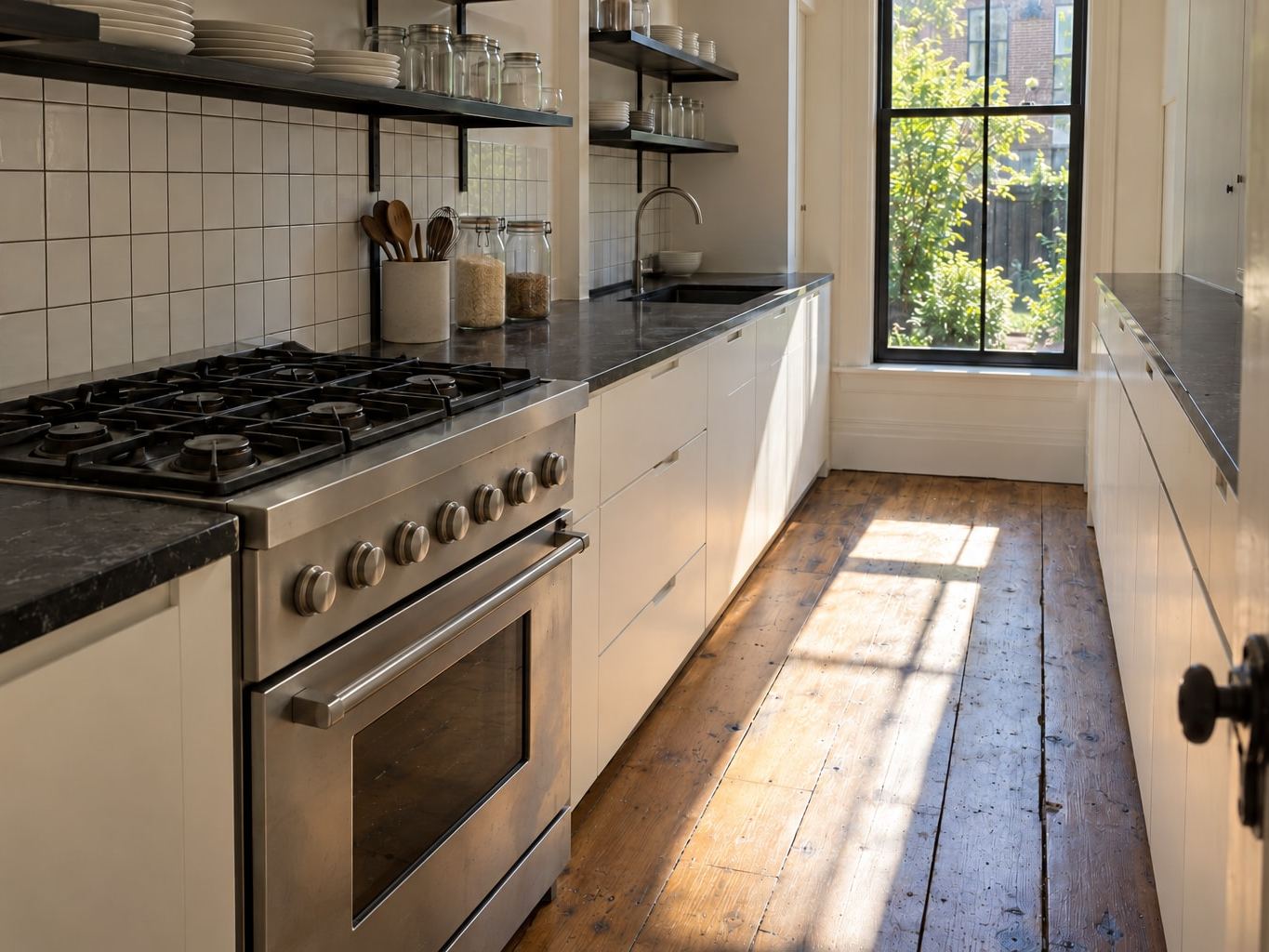
Old Town is full of brownstones and row houses that were rebuilt from the inside out. Owners keep the brick shell and the narrow footprint, then open up the rear of the house into a working kitchen with a Professional range or a sealed-burner gas cooktop. It is a lovely way to cook. It also puts the appliance at the deep end of a long, tight building, where the combustion air, the exhaust path and the cabinet clearances all decide how well the flame behaves.
A Viking gas burner is tuned to mix a specific amount of air with the gas before it lights. The brass cap spreads that mixture into an even ring, and the flame should come out crisp and mostly blue. Starve it of air and the flame softens, lifts, turns orange at the tips and leaves a dark film on the bottom of pans. Push too much air the wrong way across it, and the flame flutters and can lose its ring. Neither problem means the cooktop is worn out. Both usually mean something around it changed.
Renovations are where that change most often happens. New stone counters, a deeper cabinet box, a filler strip, a hood swapped for a bigger one, a tighter rear window, a sealed-up back door: each is reasonable on its own, and together they can quietly alter how air reaches the burner and leaves the room. One case that stays with us was an Old Town gas cooktop that had started burning yellow right after a kitchen remodel. Nothing was broken inside it. A clearance gap that the cooktop needed had been closed off during the work, and once that space was restored the flame went back to the clean blue it was designed for.
That is why our visit in a row house rarely starts with pulling parts. The technician lights each burner and reads the flame, checks the caps and ports for spillover, looks at how the unit is set into the counter and the cabinet below, and then runs the hood on each speed to see whether it is clearing the cooking zone or fighting the rest of the house. If a part has failed, we say which one and why. If the cause is the installation around the appliance, we explain what needs to change before anything is replaced.
Where our Old Town calls come from
Old Town sits just south of our Lincoln Park base, so these streets are routine for us. A few landmarks callers use when they give directions:
Second City and the stretch around it
Homes and flats on the blocks near the theater, many of them older buildings with kitchens refitted inside the original walls.
Wells Street shops
Upper-floor apartments above storefronts and the row houses on the side streets off Wells, where kitchens tend to be long and narrow.
Old Town Art Fair grounds
The residential blocks that fill with booths every summer; brownstones and rebuilt row houses with Professional ranges set against party walls.
Near the Lincoln Park Conservatory
The northern edge of the neighborhood, where Old Town meets Lincoln Park and greystones mix with newer infill homes.
If you smell gas
If you smell gas
A yellow flame calls for a booked visit; a smell of gas calls for an exit. Hands off everything: burner dials, the supply valve, the light by the door, any plug, any window sash. No match, no lighter. Get out with everyone in the household, and only once you are on the sidewalk dial 911 or the gas company. Our part begins once the utility gives the all-clear.
- Put some distance between yourself and the building before making that call.
- Locating the leak belongs to the utility crew; nobody goes back in, not even for keys or a leash.
- Repair work waits until the line has been inspected and declared safe.
Quick answer · transfer
What makes a gas burner flame turn yellow after a kitchen remodel?
Usually the burner is no longer getting the air it was set up for. New counters, cabinets or filler panels can block a clearance the cooktop needs, and debris from the work can clog the ports. A Viking flame should be crisp and mostly blue, so stop using a burner that burns yellow or leaves soot and have it checked.
What the flame and the hood are telling you
Find the line closest to what is happening in your kitchen and mention it on the phone, so the technician knows what to check first.
-
Orange or yellow flame on a Viking cooktop that used to burn blue
Likely causeA blocked air clearance after counter or cabinet work, spillover in the ports, or a cap sitting off-center on its base
-
Black soot on pan bottoms or on the wall behind the range
Likely causeIncomplete combustion from a starved flame; the burner and the surrounding installation both need to be checked
-
Weak pull from the hood even on high
Likely causeBaffle filters packed with grease, a blower motor that has lost speed, or duct airflow that does not suit a narrow, tightly sealed house
-
Cooking smells hang in the house long after dinner
Likely causeToo little air is crossing the cooking zone, or the fan speed chosen is simply outmatched by the burners running underneath it
-
Flame flutters or goes out when the hood is on high
Likely causeAir being pulled across the cooktop faster than the room can replace it; worth checking the hood and how the kitchen gets makeup air
-
Burner clicks but the flame catches only on one side
Likely causeClogged ports or a cap that was knocked out of position during cleaning
Quick answer · last stop
Can you repair a range hood in a Chicago row house?
Yes. We repair Viking hoods in row houses and brownstones: worn blower motors, unbalanced fan wheels, failed lights and controls, clogged filters and weak draft. In a long, narrow house we also check how the hood interacts with the burners and the rest of the building, because poor pull is not always a bad motor.
Old Town questions about Viking flames and hoods
- Our contractor just finished the kitchen and the new cooktop burns yellow. Is it the cooktop or the install?
- Both are possible, and in a fresh remodel the install is a frequent culprit. We read every burner, cap and port first, then study how the cooktop is set into the stone and the cabinet box and whether a clearance it needs got closed in. You leave knowing whether the cure is a component or a change to the surrounding work.
- While you are here, can you check the oven, the hood and the dishwasher too?
- Please ask. We charge $89 for the trip itself, so one visit can cover every Viking unit in the kitchen that is misbehaving, whether that is one or four. The fee is credited to the repair, and each fix gets its own exact quote after inspection, before a screwdriver comes out.
- How quickly can a technician get to Old Town?
- Calls are picked up 24/7, and the vans run 8 AM–6 PM daily. When the board shows an open window we can often make it the same day, and Old Town is right next door to our Lincoln Park base. Ring (872) 250-5505 or grab a slot online and you will hear the earliest opening.
- Is a yellow flame dangerous?
- It tells you the gas is burning incompletely, which leaves soot and can raise carbon monoxide compared with a clean blue flame. Turn that burner off, confirm the carbon monoxide alarms in the house are working, and book a check. A smell of gas is a different story: everybody outdoors, and the 911 or utility call is made from the street.